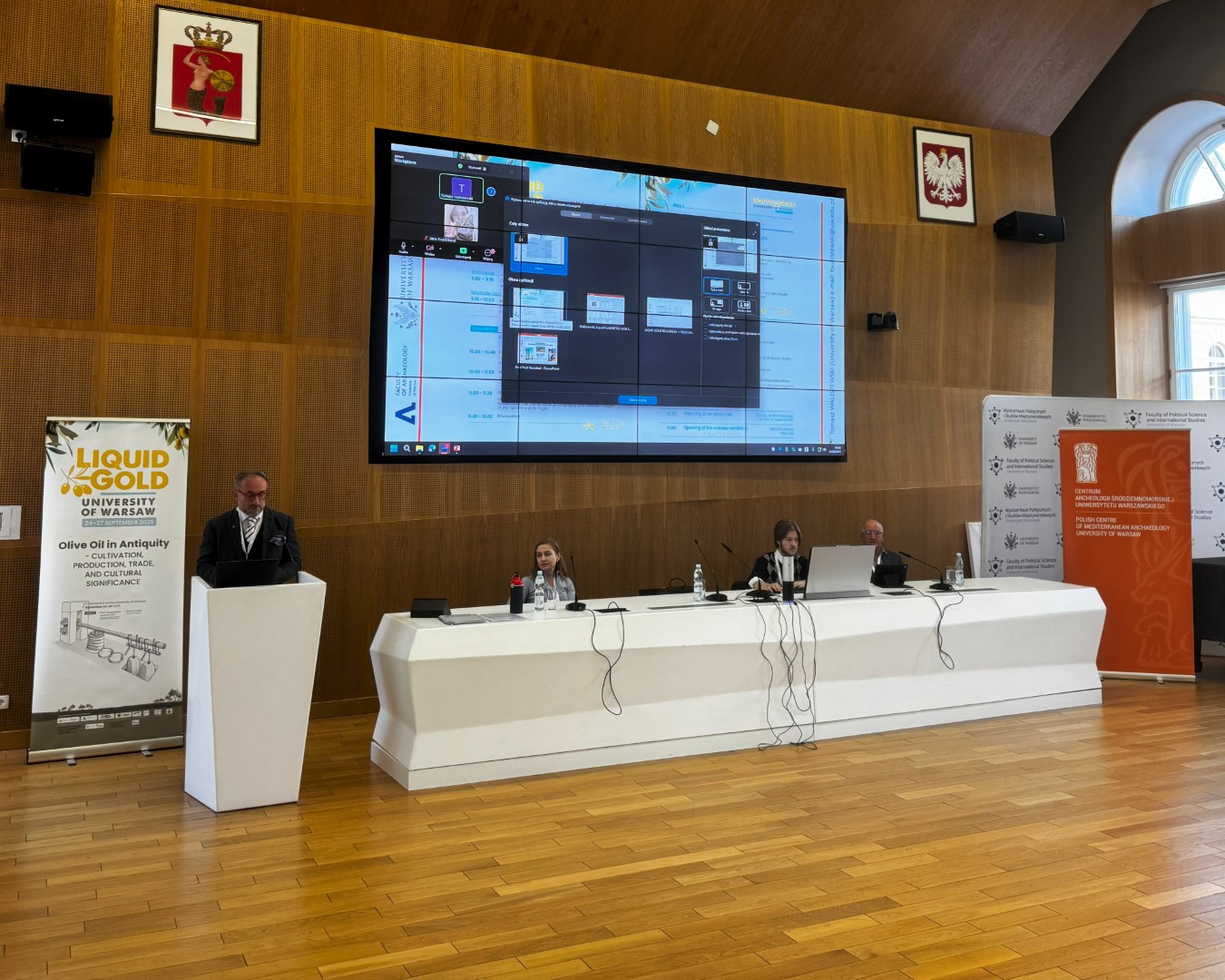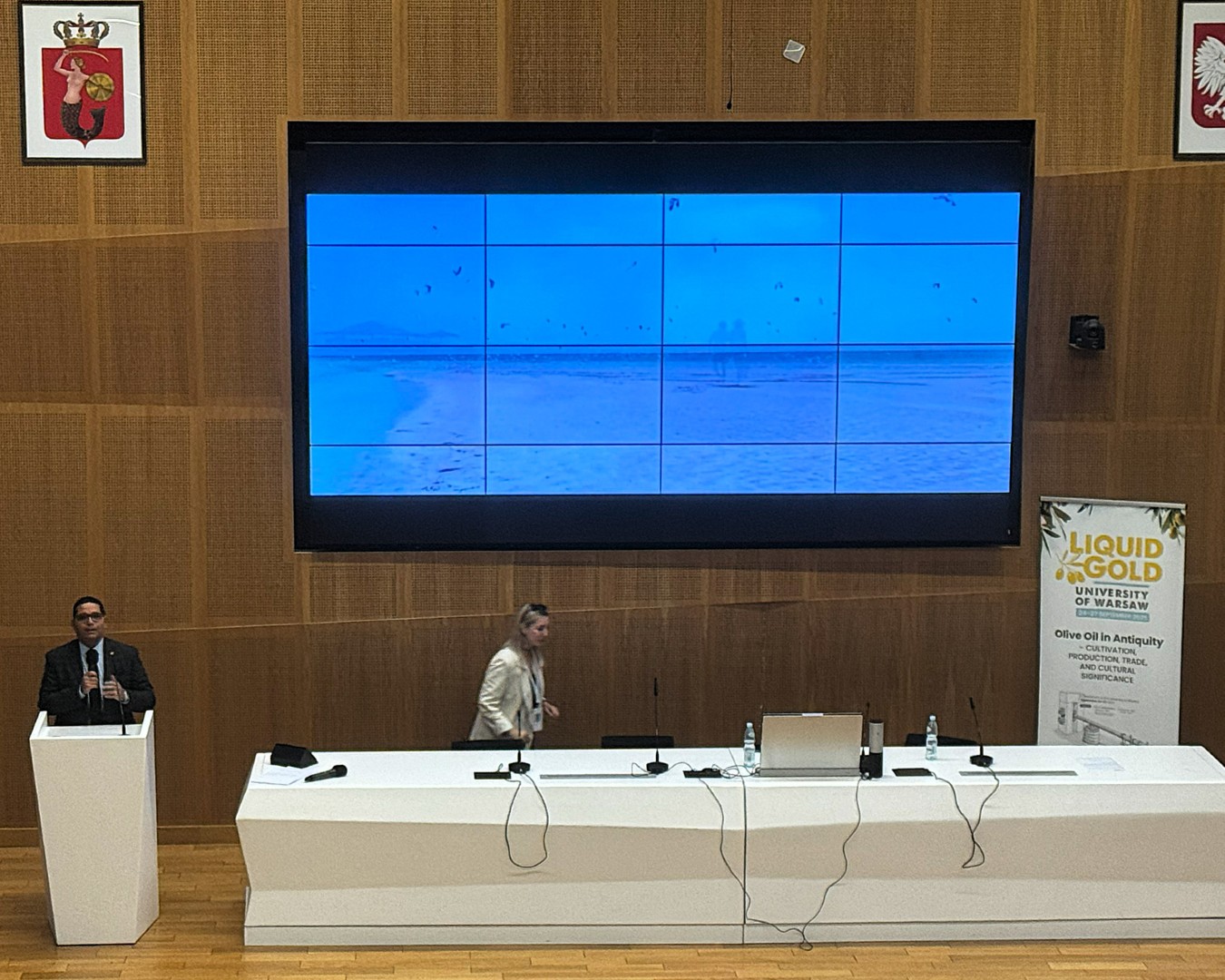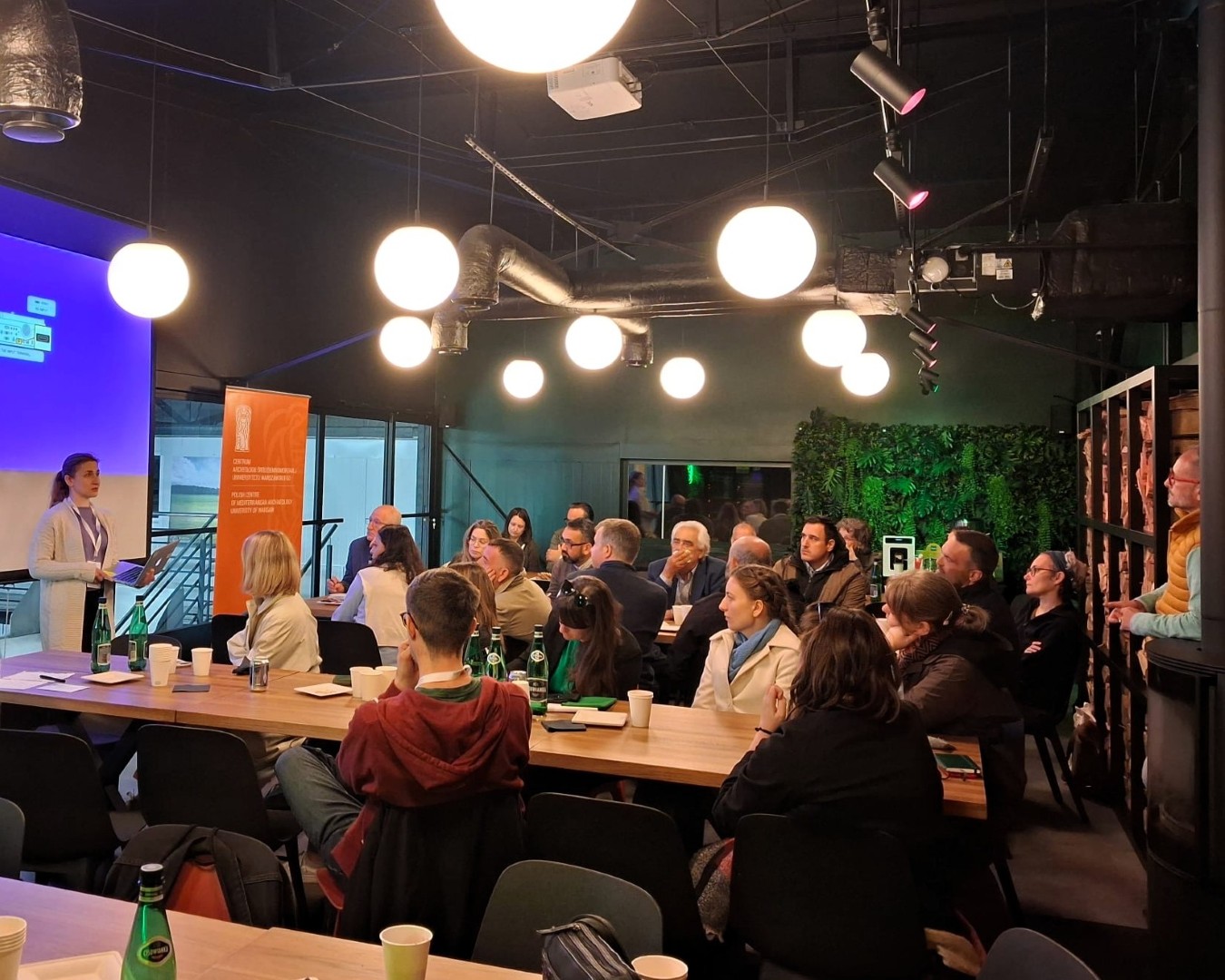
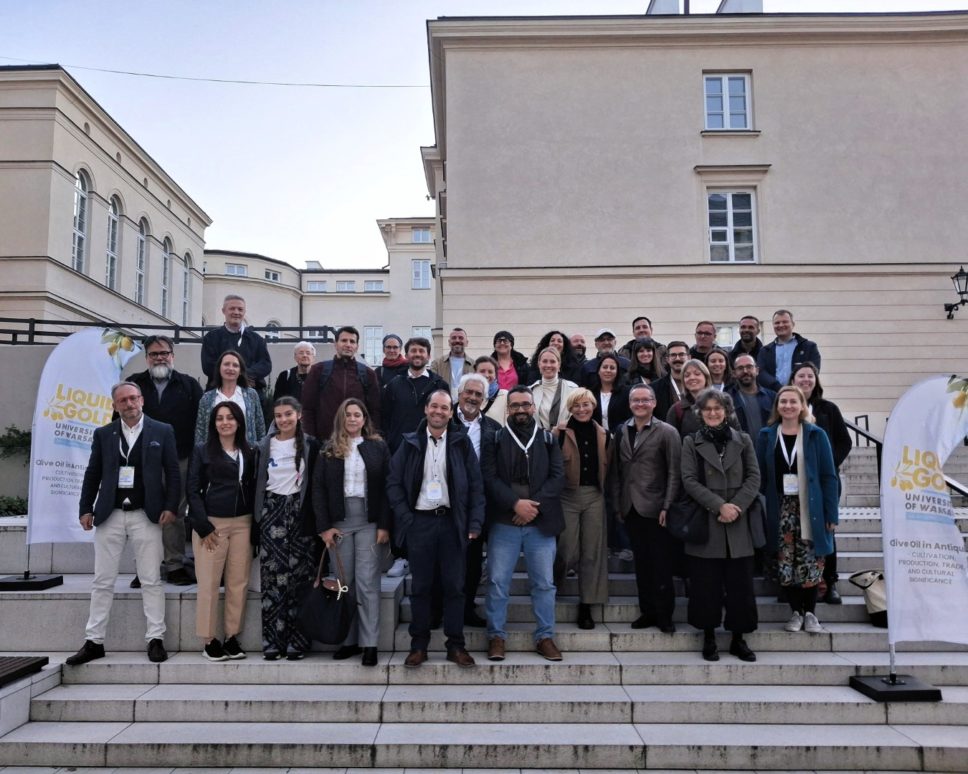
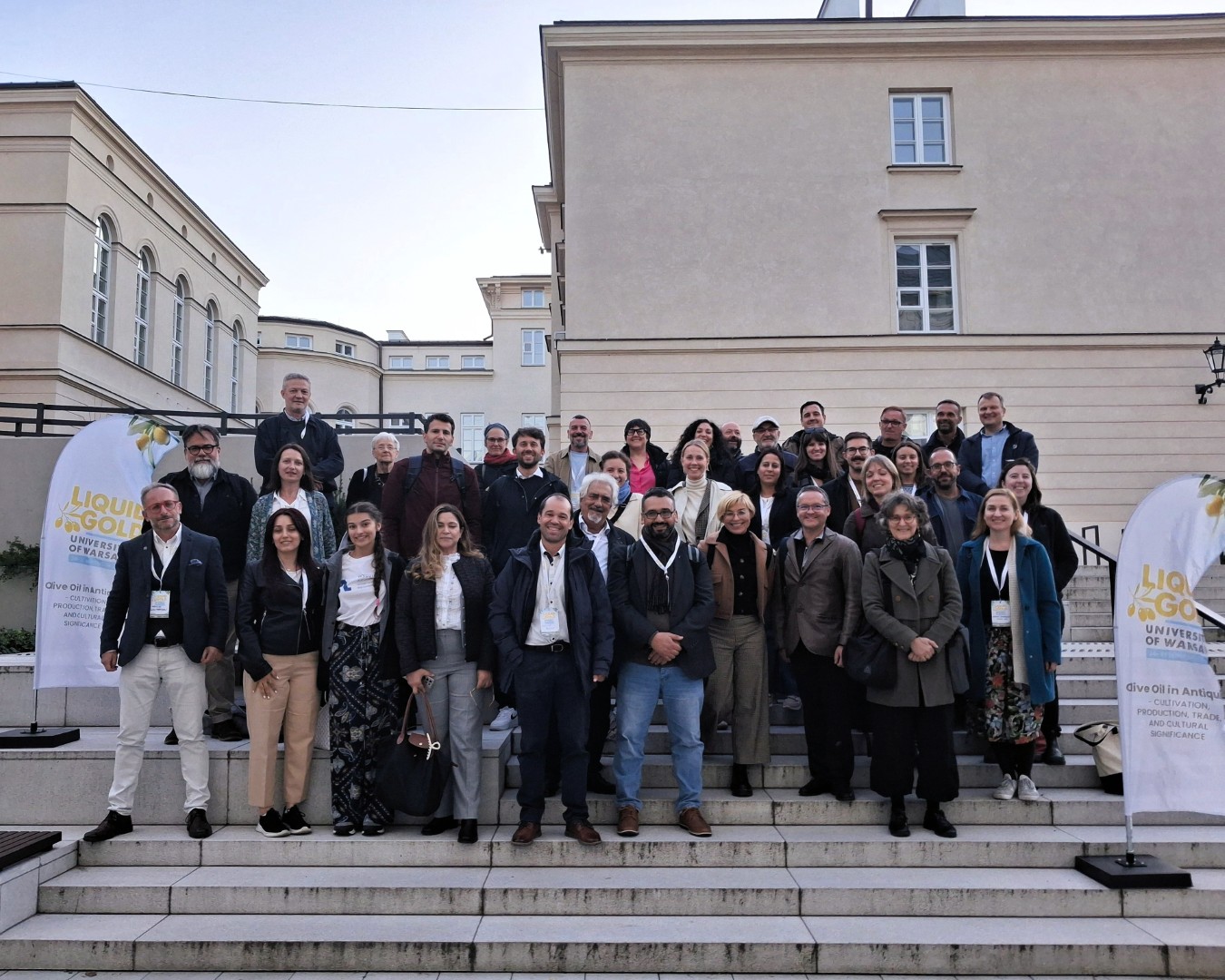
From 24 to 27 September 2025, the University of Warsaw hosted the international conference “Liquid Gold: Olive Oil in Antiquity – Cultivation, Production, Trade, and Cultural Significance”, dedicated to the role of olive oil in the ancient world. The event brought together scholars from over a dozen countries, representing a wide range of disciplines: archaeology, history, papyrology, archaeobotany, chemistry, and economics.
The conference was opened by Assoc. Prof. Tomasz Waliszewski (Faculty of Archaeology, University of Warsaw), Chair of the Organizing Committee, who welcomed the guests on behalf of the organizers and partners. The program included several thematic sessions presenting the latest research on olive cultivation, pressing technology, trade in olive oil, and its social, religious, and symbolic significance in antiquity.
Plenary lectures were delivered by:
- Prof. David John Mattingly (University of Leicester) – a leading authority on North Africa, who, in the opening keynote, discussed the importance of olive oil in the Roman world.
- Prof. Erica Rowan (Royal Holloway, University of London) – a specialist in archaeobotany and the ancient economy, who examined the domestication of the olive tree and its role as a source of energy.
- Prof. José Remesal Rodríguez (Universitat de Barcelona) – one of the foremost experts on Roman amphorae and olive oil trade, who presented new perspectives on the distribution of olive oil in the Roman world.
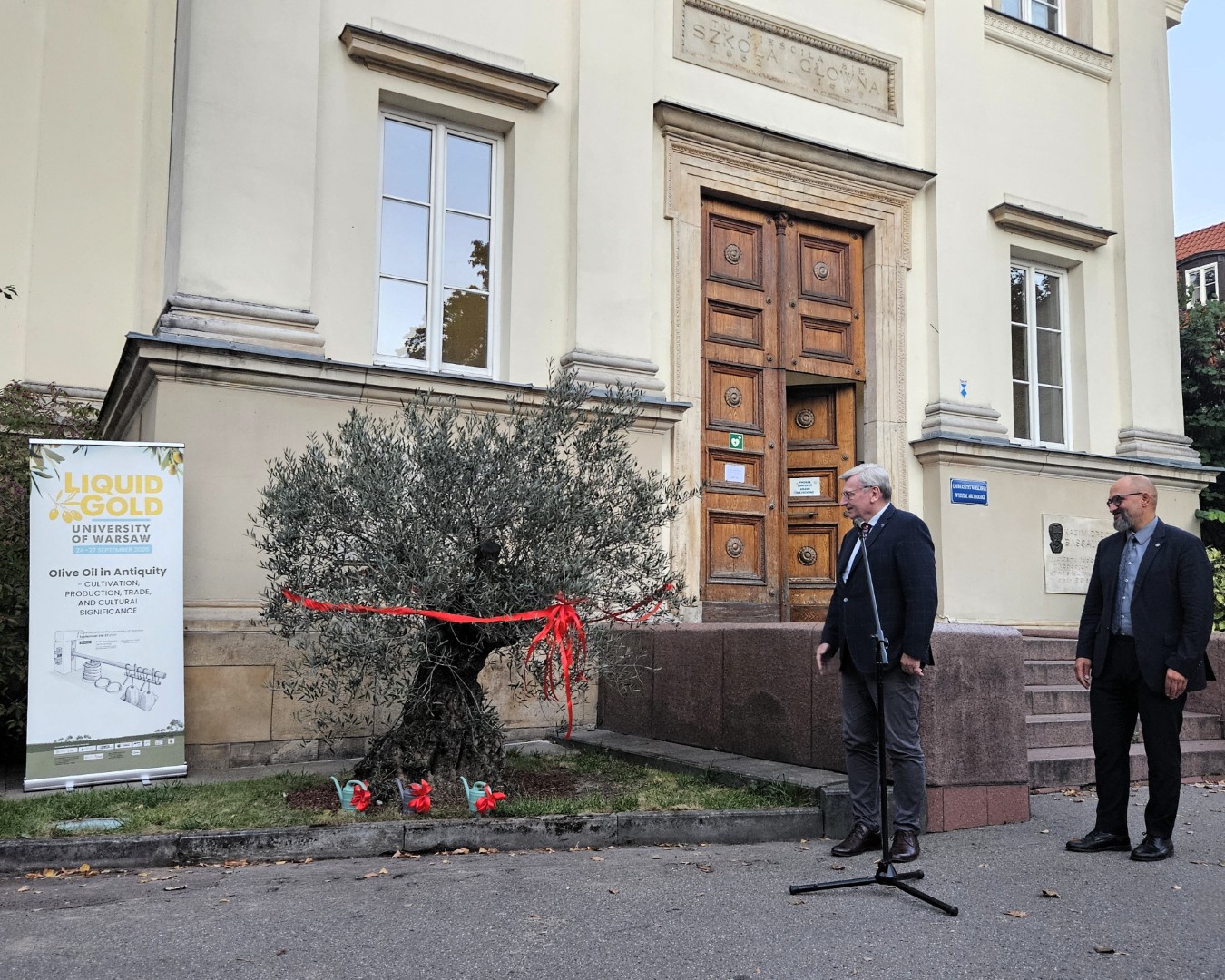
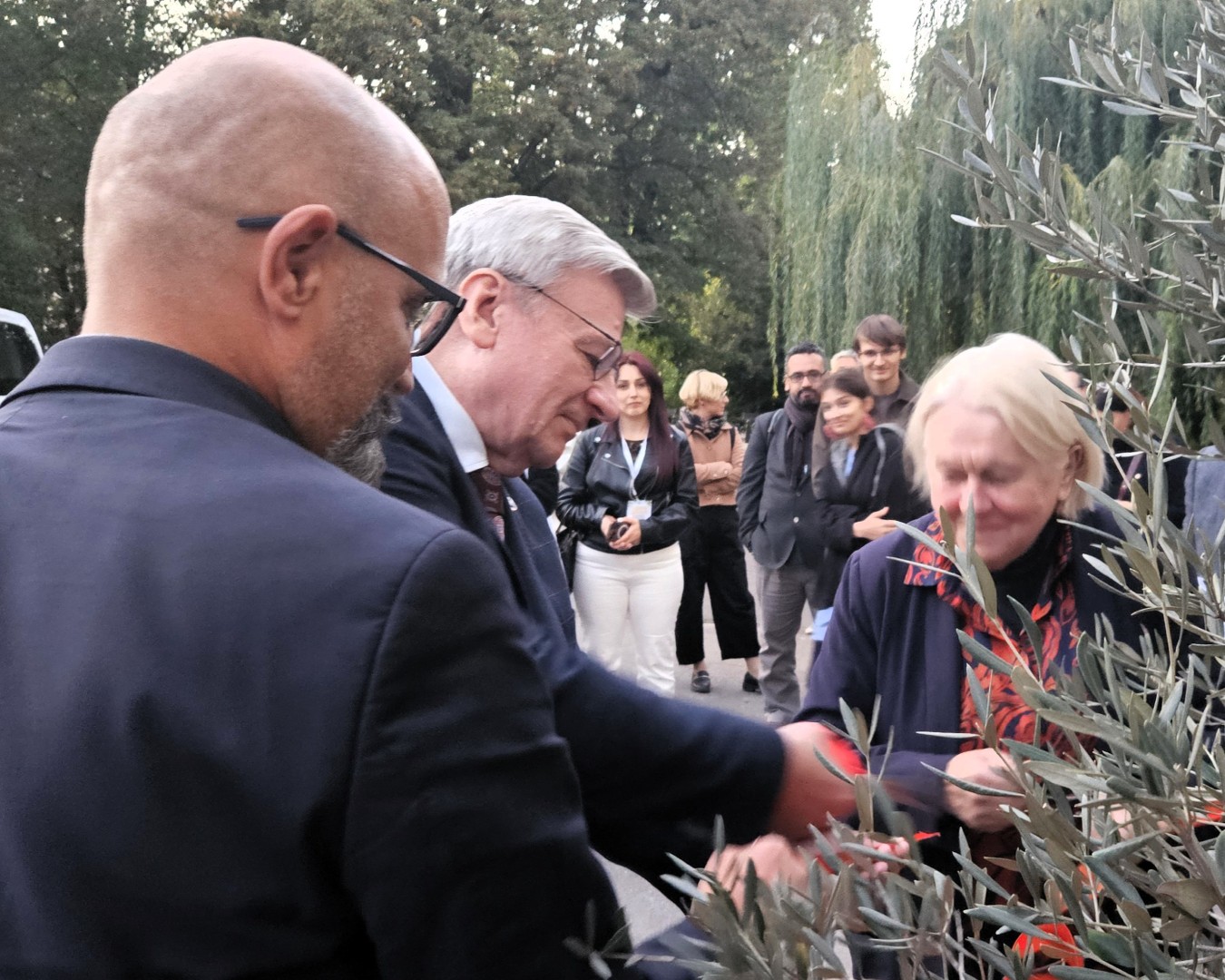
The conference was accompanied by unique initiatives held on the UW main campus. On 24 September, an olive tree was planted in front of the Faculty of Archaeology. The symbolic gesture was performed by representatives of the University authorities: Prof. Zygmunt Lalak (Vice-Rector for Research, UW) and Prof. Bartosz Kontny (Dean of the Faculty of Archaeology, UW), together with the organizers and guests, highlighting the enduring nature of research and the intercultural character of the meeting. The tree was given the name “Oliwka” and placed under the care of the university’s gardening team, led by MSc Eng. Barbara Siedlicka.
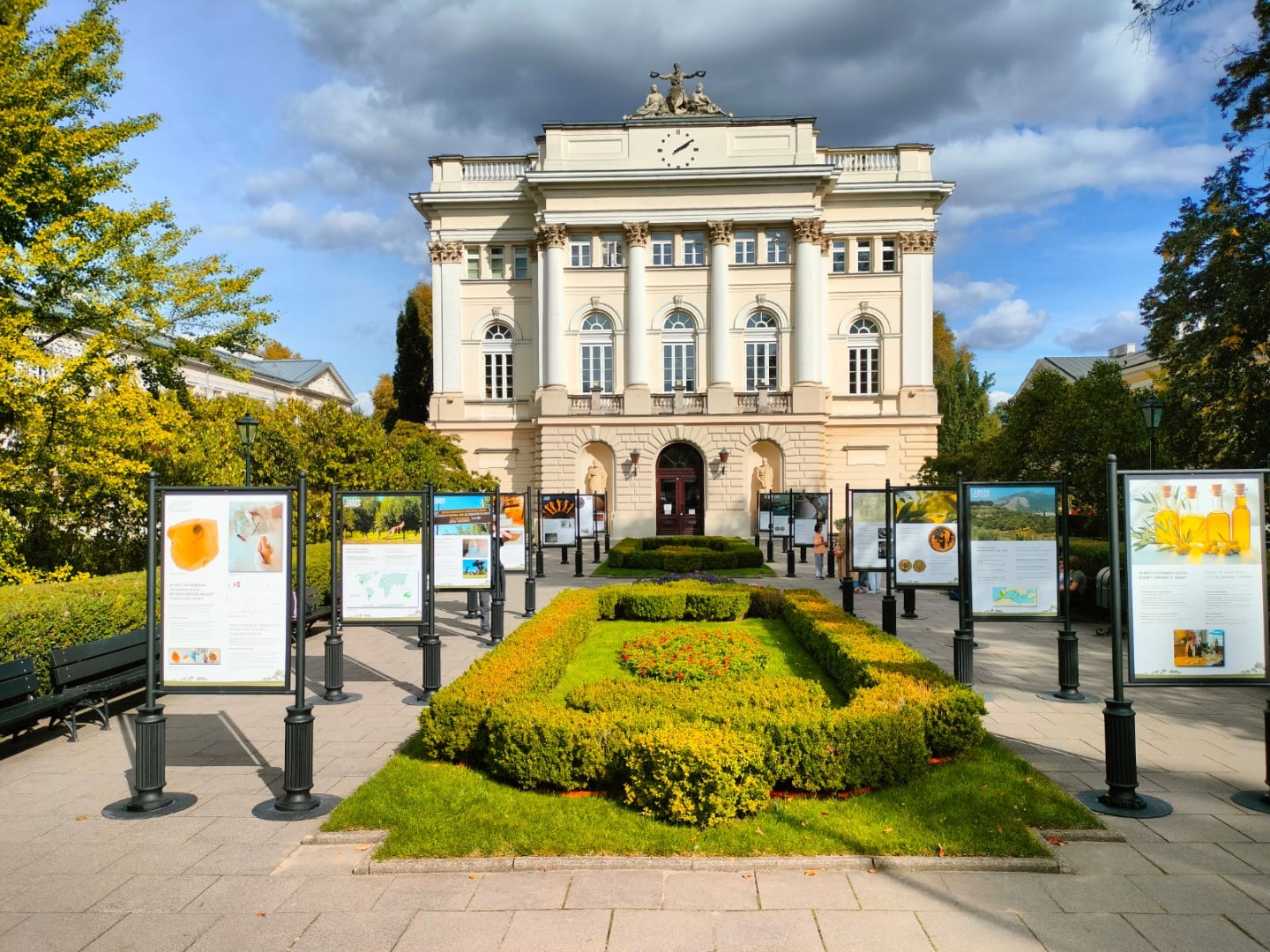
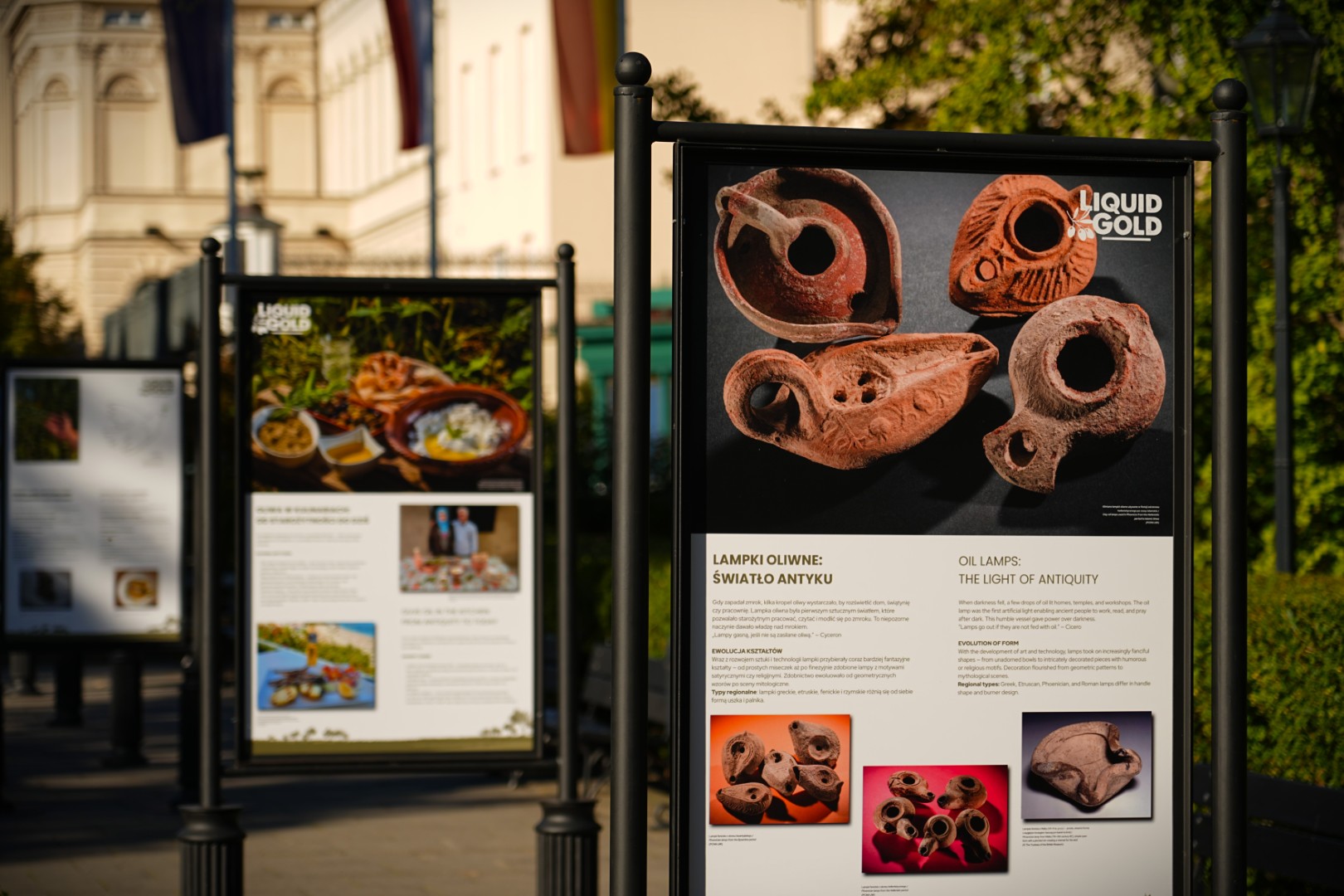
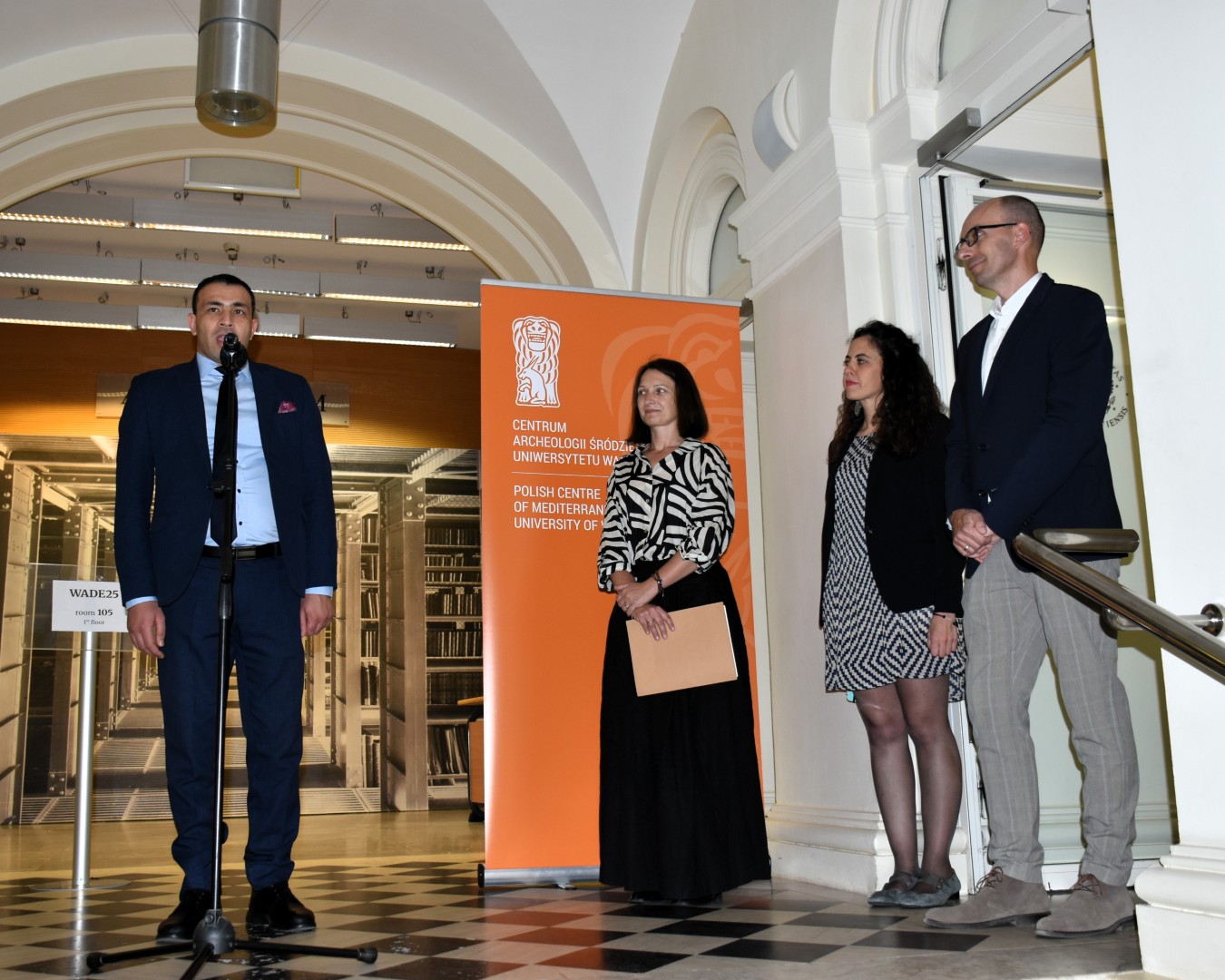
That same evening, the open-air exhibition “Liquid Gold: Power, Culture, and Heritage of Olive Oil” was inaugurated by Dr. Mariusz Drzewiecki, Deputy Director of the Polish Centre of Mediterranean Archaeology UW. Prepared by the Polish Centre of Mediterranean Archaeology UW, the Faculty of Archaeology UW, and the University of Warsaw Museum, the exhibition—on display in front of the Old Library building until mid-October 2025—illustrates the multifaceted significance of olive oil in the Mediterranean world: from cultivation and production, through its economic and social role, to its religious dimension.
The opening was enhanced i.a. by a tasting of olive oil from Spain, organized by Foods & Wines from Spain – Commercial Office of the Embassy of Spain in Poland, and led by Adrian Stojewski (Hiszpańskie Smaki). It was also possible to try Croatian specialties thanks to the Olive Oil Museum in Skrip on Brač Island, Croatia. On the third evening of the conference, a “Tunisian Night” was held, featuring a tasting of Tunisian olive oil, organized by the Embassy of Tunisia in Poland.
The conference and its accompanying events were organized thanks to the cooperation of numerous institutions and with the support of the “Excellence Initiative – Research University” program (IDUB UW) and the Centre for Research on Ancient Civilizations (CRAC UW).
Organizing Committee: Assoc. Prof. Tomasz Waliszewski (Faculty of Archaeology, UW), Dr. Dorota Dzierzbicka (PCMA UW), Dr. Paulina Komar (PCMA UW), Dr. Jana Kopáčková (Archaeological Museum in Zagreb), Dr. Dimitri van Limbergen (University of Verona), Assoc. Prof. Urszula Wicenciak-Núñez (PCMA UW).
Gallery: